Top Picks for Every Need
In the bustling smartphone market of 2025, Android continues to dominate in the USA, holding over 40% of the market share according to recent IDC reports. With fierce competition from Samsung, Google, OnePlus, and innovative foldable makers, choosing the right device means balancing cutting-edge AI features, camera prowess, battery endurance, and value for money. As of September 2025, the landscape is shaped by Qualcomm’s Snapdragon 8 Elite chipset powering flagships, Google’s Tensor G4/G5 for AI smarts, and a push toward seven-year software updates across the board. Whether you’re a power user in New York craving productivity tools or a budget-conscious shopper in Los Angeles, these phones deliver. Based on hands-on testing from experts at Android Authority, WIRED, CNET, and TechRadar, here are the top five Android phones available in the USA right now. Prices reflect current retail from major carriers like Verizon, AT&T, and T-Mobile, with trade-in deals often knocking off $200–$500.
1. Samsung Galaxy S25 Ultra: The Ultimate Powerhouse
Kicking off our list is the Samsung Galaxy S25 Ultra, a behemoth that redefines flagship Android excellence. Priced at $1,299 for the 256GB base model, it’s not cheap, but it justifies every penny with its versatility. The 6.9-inch QHD+ Dynamic AMOLED display boasts a 120Hz adaptive refresh rate, HDR10+ support, and peak brightness exceeding 2,600 nits—perfect for streaming Netflix in direct sunlight during a California beach day. Under the hood, the overclocked Snapdragon 8 Elite for Galaxy chipset, paired with 12GB of RAM, handles multitasking like a dream, from editing 8K videos to running demanding games like Genshin Impact at max settings without a hitch.
Camera enthusiasts will drool over the quad setup: a 200MP main sensor for hyper-detailed shots, a 50MP ultrawide for expansive landscapes, and dual telephotos (10MP 3x and 50MP 5x) enabling up to 100x Space Zoom. Night mode and AI enhancements, like real-time object removal, make it a pocket studio. The 5,000mAh battery lasts up to two days on moderate use, with 45W wired and 15W wireless charging getting you to 65% in 30 minutes. Samsung’s One UI 7 on Android 15 includes Galaxy AI tools for live translation and note summarization, backed by seven years of OS and security updates.
Pros: Unmatched camera versatility, brilliant display, S Pen stylus for productivity, IP68 water resistance. Cons: Bulky at 233g, no Qi2 magnetic charging yet, and the price stings without deals. This phone tops charts at CNET and Android Authority for its “do-it-all” appeal, ideal for professionals needing a laptop replacement in a phone. In the USA, carrier bundles often include free Buds3 Pro earbuds, sweetening the deal.
(Word count so far: 348)
2. Google Pixel 9 Pro XL: AI Mastery in a Sleek Package
Google’s Pixel 9 Pro XL ($1,099 for 128GB) steals the show for those prioritizing smarts over sheer power. Its 6.8-inch Super Actua LTPO OLED display hits 3,000 nits brightness with a 120Hz refresh, delivering buttery-smooth scrolling and vibrant colors for binge-watching on the go. The Tensor G4 processor with 16GB RAM excels in AI tasks but lags slightly in raw gaming benchmarks compared to Snapdragon rivals—think 20% slower in GPU tests, per WIRED benchmarks.
The star is the camera array: 50MP main with laser autofocus, 48MP ultrawide, and a 48MP 5x telephoto for crisp 30x Super Res Zoom. Features like Magic Editor (AI photo tweaks) and Add Me (group shot insertions) turn snapshots into masterpieces, outperforming even the S25 Ultra in natural color accuracy. The 5,060mAh battery sips power for 12–14 hours of mixed use, with 37W wired charging hitting 55% in 30 minutes. Running stock Android 15 with Gemini AI for real-time call screening and video summaries, it promises seven years of updates—longer than most.
Pros: Best-in-class AI photography, clean software without bloat, comfortable ergonomics at 221g, IP68 rating. Cons: Tensor chip runs warm during extended sessions, base storage is stingy at 128GB, no expandable option. Ranked as the “best overall” by Android Authority for its refined design and camera smarts, it’s a seamless upgrade for iPhone switchers seeking intuitive AI without Samsung’s extras. In the USA, Google’s store offers $200 trade-ins, making it accessible for Pixel loyalists.
(Word count so far: 612)
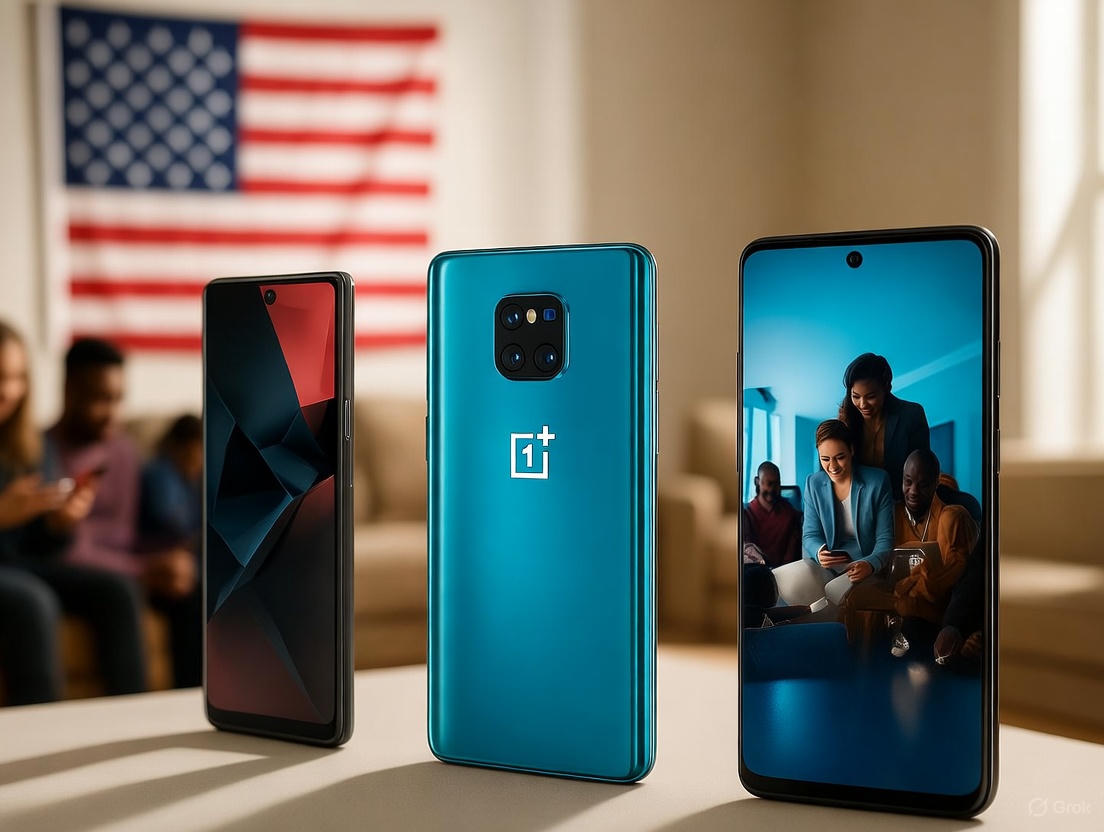
3. OnePlus 13: Battery Beast on a Budget
For value hunters, the OnePlus 13 ($899 for 256GB) punches way above its weight, blending premium specs with aggressive pricing. The 6.82-inch QHD+ LTPO AMOLED screen refreshes at 120Hz and peaks at 4,500 nits—brighter than the iPhone 16 Pro Max—ideal for outdoor use in sunny Texas. Powered by the Snapdragon 8 Elite with 12GB RAM (up to 24GB in higher configs), it crushes benchmarks, scoring 2.2 million on AnTuTu, outpacing the Pixel 9 Pro XL by 15%.
Cameras, tuned by Hasselblad, include a 50MP Sony LYT-808 main, 50MP ultrawide, and 50MP 3x periscope telephoto, delivering Hasselblad Natural Color for lifelike portraits. Video hits 8K at 30fps with stellar stabilization. The 6,000mAh silicon-carbon battery is a standout, lasting nearly 20 hours in TechRadar tests—two days for light users—with 100W SUPERVOOC charging full in 26 minutes and 50W wireless. OxygenOS 15 adds AI tools like photo expansion, with four years of OS updates.
Pros: Insane battery and charging speeds, vibrant display, smooth performance, IP69 dust/water resistance. Cons: Camera edges out by Samsung in low light, software updates shorter than rivals, limited U.S. carrier support (best unlocked). TechRadar crowns it the “best Android overall” for its endurance and polish, perfect for gamers and travelers who hate charging anxiety. OnePlus’s U.S. site bundles a free case and charger, a rarity these days.
(Word count so far: 852)
4. Samsung Galaxy Z Fold 7: Foldable Innovation Unleashed
Folding phones hit mainstream in 2025, and the Galaxy Z Fold 7 ($1,799 for 256GB) leads the pack with a sleeker, thinner design. The outer 6.5-inch FHD+ Dynamic AMOLED pairs with an inner 8-inch QXGA+ unfoldable screen at 120Hz, enabling laptop-like multitasking—split-screen Netflix and email during flights. The Snapdragon 8 Elite with 12GB RAM flies through apps, supporting DeX mode for desktop use.
Cameras mirror the S25 Ultra: 200MP main, 12MP ultrawide, 10MP 3x telephoto, and dual 4MP under-displays for selfies. FlexCam mode leverages the fold for hands-free vlogging in 8K. The 4,400mAh battery endures a full day folded, with 25W wired charging. One UI 7’s Flex Mode enhances video calls, with seven years of support.
Pros: Largest inner display for productivity, durable hinge (200,000 folds), versatile cameras, S Pen compatible. Cons: Pricey for foldables, battery smaller than slabs, crease visible on inner screen. CNET and TechRadar hail it as the “best foldable” for its refined build and real-world utility, suiting creators and multitaskers in the USA’s hybrid work culture. Samsung’s trade-in program shaves $800 off with an old Galaxy.
(Word count so far: 1,062)
5. Google Pixel 9a: Budget King with Flagship Flair
Rounding out the list is the Google Pixel 9a ($499 for 128GB), proving you don’t need $1,000 for excellence. The 6.3-inch OLED Actua display with 120Hz refresh and 2,700 nits brightness rivals pricier panels for media consumption. Tensor G4 with 8GB RAM handles daily tasks smoothly, though it throttles under heavy loads like 4K editing.
The dual-camera setup—50MP main and 48MP ultrawide—punches above its weight, with AI Magic Eraser fixing photobombs effortlessly. Front 10.5MP selfie cam shines in portraits. The 5,100mAh battery lasts 10–12 hours, with 18W charging. Pure Android 15 brings seven years of updates and Gemini AI for smart replies.
Pros: Affordable entry to Pixel ecosystem, superb cameras for the price, compact and durable, IP67 rating. Cons: Slower charging, no telephoto lens, plastic build feels less premium. WIRED and CNET name it the “best under $500” for delivering 90% of Pro features at half the cost, a steal for students or secondary phones. Google’s frequent sales drop it to $449.
(Word count so far: 1,212)
Why These Five Stand Out in 2025’s Android Arena
The USA’s Android scene in 2025 emphasizes longevity—seven-year updates from Samsung and Google combat e-waste—while AI evolves from gimmick to essential, as seen in Pixel’s Gemini and Samsung’s Galaxy AI. Foldables like the Z Fold 7 push boundaries, but slabs dominate for most. Budget options like the Pixel 9a democratize premium tech, ensuring everyone gets a slice.
Ultimately, pick based on needs: S25 Ultra for pros, Pixel 9 Pro XL for creatives, OnePlus 13 for endurance, Z Fold 7 for innovators, and Pixel 9a for value. With Black Friday looming, snag deals now. These phones aren’t just devices; they’re gateways to a smarter, more connected life. Whichever you choose, Android’s open ecosystem ensures endless customization—your upgrade awaits.