A Comprehensive Guide (2025)
In an era of economic uncertainty, personal loans remain a vital financial tool for Americans seeking quick access to funds for debt consolidation, home improvements, medical expenses, or unexpected emergencies. As of October 2025, the average personal loan interest rate hovers around 11.57% for a 24-month term, according to Federal Reserve data, but rates can vary widely from 6% to 36% based on creditworthiness, loan amount, and lender policies. Choosing a trusted lender is crucial to avoid predatory practices, hidden fees, and unfavorable terms. Trusted providers are typically those with strong BBB ratings, positive customer reviews on platforms like Trustpilot, and transparent operations backed by FDIC-insured banks.
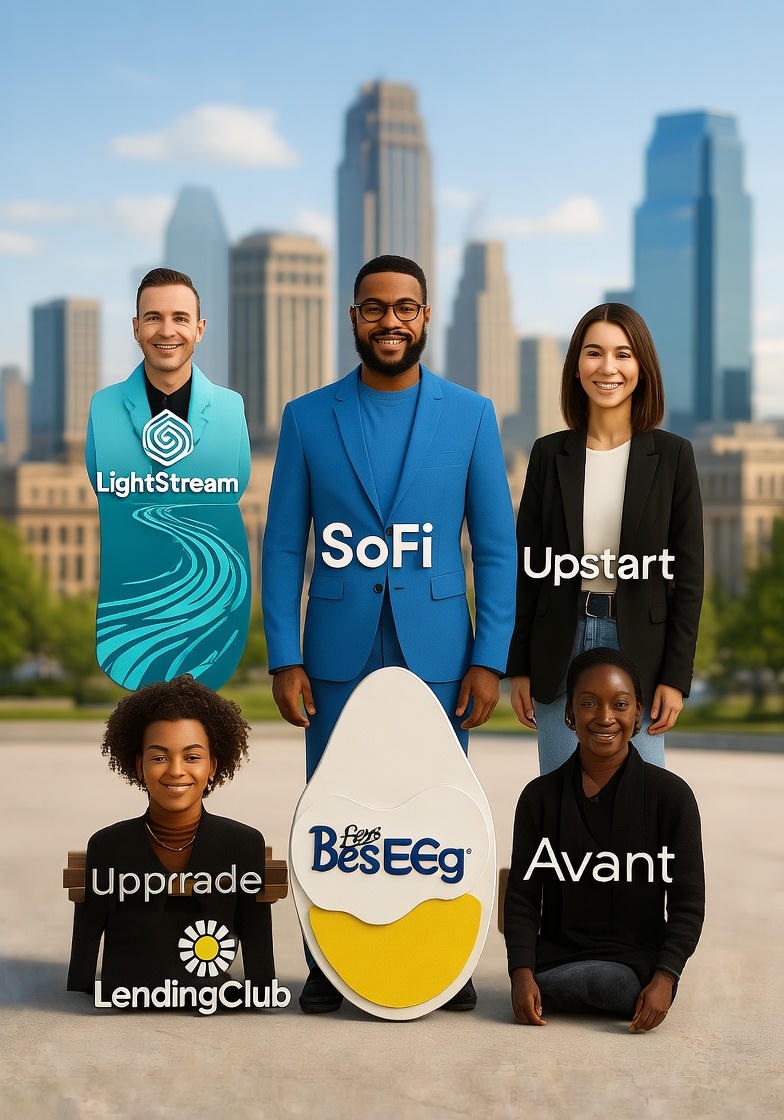
This article spotlights seven reputable online lenders—LightStream, SoFi, Upstart, Upgrade, LendingClub, Best Egg, and Avant—selected based on expert analyses from Forbes, NerdWallet, and Bankrate. These lenders were evaluated for competitive APRs, flexible terms, minimal fees, and accessibility across credit profiles. Each offers unsecured personal loans (no collateral required), with funding often available within one business day. Whether you have excellent credit or a thinner file, there’s an option here to fit your needs. Read on for detailed breakdowns to help you decide.
1. LightStream: Best for Low Rates and Fast Funding
LightStream, a division of Truist Bank, stands out as a top choice for borrowers with strong credit seeking premium features without the premium price tag. Launched in 2012, it specializes in unsecured personal loans for purposes like home renovations, auto purchases, and debt payoff, emphasizing speed and simplicity. In 2025, LightStream continues to dominate rankings for its Rate Beat program, where it promises to undercut any competitor’s offer by 0.10% if you provide proof.
Key offerings include loan amounts from $5,000 to $100,000, with APRs ranging from 6.99% to 24.89% (including a 0.50% AutoPay discount). Repayment terms span 24 to 84 months, allowing flexibility for larger sums—ideal for funding a kitchen remodel without monthly strain. There are no origination fees, prepayment penalties, or late charges, making it one of the most borrower-friendly options. Eligibility requires a minimum credit score of 660, stable income, and U.S. residency, but prequalification uses a soft credit check to avoid dings.
Pros: Unmatched low starting rates for excellent-credit borrowers (typically 720+ FICO), same-day funding if approved by 2:30 p.m. ET, and extended terms up to seven years. Customer service shines with a 4.5/5 Bankrate rating, praised for quick resolutions. Cons: Higher minimum loan amount excludes small-borrow needs, and those with fair credit may face rejection or higher rates. Overall, LightStream earns a Trustpilot score of 4.7/5 from over 1,200 reviews, with users lauding its efficiency: “Funds hit my account the same day—game-changer for my emergency roof repair.”
For tech-savvy users, the online application takes under 10 minutes, and integration with tools like Plaid streamlines bank verification. In a market where average rates exceed 12%, LightStream’s transparency and perks make it a go-to for creditworthy individuals aiming to minimize costs.
2. SoFi: Best for Excellent Credit and Perks
SoFi, the fintech darling born from student loan refinancing in 2011, has evolved into a full-service financial powerhouse offering personal loans alongside banking and investing products. It’s particularly appealing to young professionals with solid finances who value holistic wealth-building tools. In 2025, SoFi’s personal loans cater to debt consolidation and major life events, with a focus on member benefits like career coaching and financial advisors.
Loans range from $5,000 to $100,000, with APRs from 8.99% to 35.49% after discounts for AutoPay and direct deposit. Terms are 24 to 84 months, and an optional origination fee up to 7% applies, though many qualify fee-free. Minimum credit score is 300, but the lowest rates demand 680+, plus verifiable income over $45,000 annually. Funding arrives same-day if approved early, via ACH or wire.
Pros: No mandatory fees for most, unemployment protection (payment deferrals), and co-borrower options for shared responsibility. SoFi’s app integrates loan tracking with budgeting, earning a 4.7/5 NerdWallet rating. Cons: High maximum APR punishes lower scores, and the $5,000 minimum suits bigger needs only. Customer sentiment on Forbes clocks in at 4.2/10 overall, but 64% praise ease of approval, with complaints centering on service delays during peak times.
SoFi’s edge lies in its ecosystem: Borrowers often bundle loans with high-yield savings (4.50% APY as of October 2025), amplifying long-term savings. Reviews on Trustpilot (4.2/5 from 5,000+ users) highlight reliability: “Refinanced my debt seamlessly—saved $200/month and got career tips as a bonus.” For ambitious savers, SoFi isn’t just a lender; it’s a partner.
3. Upstart: Best for Thin Credit Histories
Upstart disrupts traditional lending with AI-driven underwriting that factors in education, job history, and potential earnings alongside credit scores. Founded in 2012, it’s a lifeline for recent grads or career changers lacking long credit files. By 2025, Upstart has funded over $35 billion in loans, prioritizing inclusivity without sacrificing speed.
Expect $1,000 to $50,000 in funding (up to $75,000 in some states), APRs of 6.70% to 35.99%, and terms of 36 or 60 months—limiting options but suiting quick payoffs. An origination fee up to 12% deducts from proceeds, but no prepay penalties apply. No minimum credit score is needed, though 600+ unlocks better terms; applicants must be 18+, U.S.-based, with $12,000 annual income.
Pros: Broad eligibility (considers 1,600+ variables), next-day funding if accepted pre-5 p.m. ET, and payment flexibility like date changes. It scores 4.7/5 on Bankrate for thin-credit borrowers. Cons: High fees and max rates, plus no joint apps. Forbes’ sentiment index is 3.4/10, with 87% negative on service but 66% positive on approvals.
Upstart’s algorithm shines for non-traditional profiles: A software engineer with a short history might score better than a veteran with recent dings. Trustpilot users (3.8/5 from 2,000 reviews) appreciate accessibility: “Approved with limited credit—funds for my certification course arrived overnight.” It’s transformative for underserved groups, though fee-savvy shoppers should calculate net costs.
4. Upgrade: Best for Fair Credit and Debt Consolidation
Upgrade blends lending with credit-building tools, making it a smart pick for those rebounding from financial setbacks. Established in 2017, it partners with Cross River Bank and emphasizes rewards like cash back on payments. In 2025, it’s lauded for direct creditor payments, easing consolidation hassles.
Loans span $1,000 to $50,000, APRs 7.99% to 35.99% (with 0.50% AutoPay cut), and terms 24 to 84 months. Origination fees run 1.85% to 9.99%, but early payoff is free. Minimum credit: 600; income $10,000+ suffices, with joint apps available.
Pros: Discounts for consolidation (0.50%) and autopay, one-day funding, plus a free credit health tool. 4.6/5 Bankrate rating highlights service. Cons: Fees inflate costs, high max APR. Forbes rates it 5.4/10, with 94% approving the process but 36% griping rates.
Upgrade’s dashboard tracks progress, motivating users: “Consolidated cards at 15% APR—now building equity,” per a Trustpilot review (4.5/5, 6,000+). It’s empowering for fair-credit folks eyeing stability.
5. LendingClub: Best for Joint Applications and Speed
Pioneering peer-to-peer lending since 2006, LendingClub now operates via its bank arm, focusing on community-driven funding. It’s ideal for couples consolidating jointly in 2025, with direct payoff options.
Amounts: $1,000-$40,000; APRs 7.90%-35.99%; terms 24-72 months. Fees: 0%-8% origination. Min credit: 600; same-day funding possible.
Pros: Joint loans, creditor payments, 4.7/5 NerdWallet score. Cons: Variable fees, no autopay discount. Trustpilot: 4.0/5.
Users love efficiency: “Joint app approved in hours—debts cleared fast.”
6. Best Egg: Best for Secured Options and Quick Approvals
Best Egg, powered by Marlette Funding since 2014, offers secured loans using CDs or savings for lower rates. Suited for debt payoff in 2025.
Loans: $2,000-$50,000; APRs 6.99%-35.99%; terms 36-60 months. Fees: Up to 4.99% origination. Min credit: 600.
Pros: Secured perks, 4.6/5 Trustpilot (9,100 reviews). Cons: Shorter terms, fees. “Easy process, low rate with my savings as collateral,” says a reviewer.
7. Avant: Best for Fair-to-Poor Credit
Avant targets mid-range scores with user-friendly tech since 2012. Great for small emergencies in 2025.
Loans: $2,000-$35,000; APRs ~9.95%-35.99%; terms 12-60 months. Fees: Up to 4.75% admin. Min credit: 550.
Pros: Next-day funds, 4.6/5 Trustpilot (28,000 reviews). Cons: High rates, fees. “Lifeline for my score—quick cash,” per users.
Conclusion: Choosing Your Ideal Lender
Navigating personal loans in 2025 demands balancing rates, fees, and fit. Prequalify with multiple lenders to compare without credit hits, and calculate total costs using online calculators. Prioritize FDIC backing and read fine print on fees. With these seven trusted options—from LightStream’s elite rates to Avant’s accessibility—empower your financial goals responsibly. Consult a advisor for personalized advice, and remember: Borrowing builds wealth only when managed wisely.